


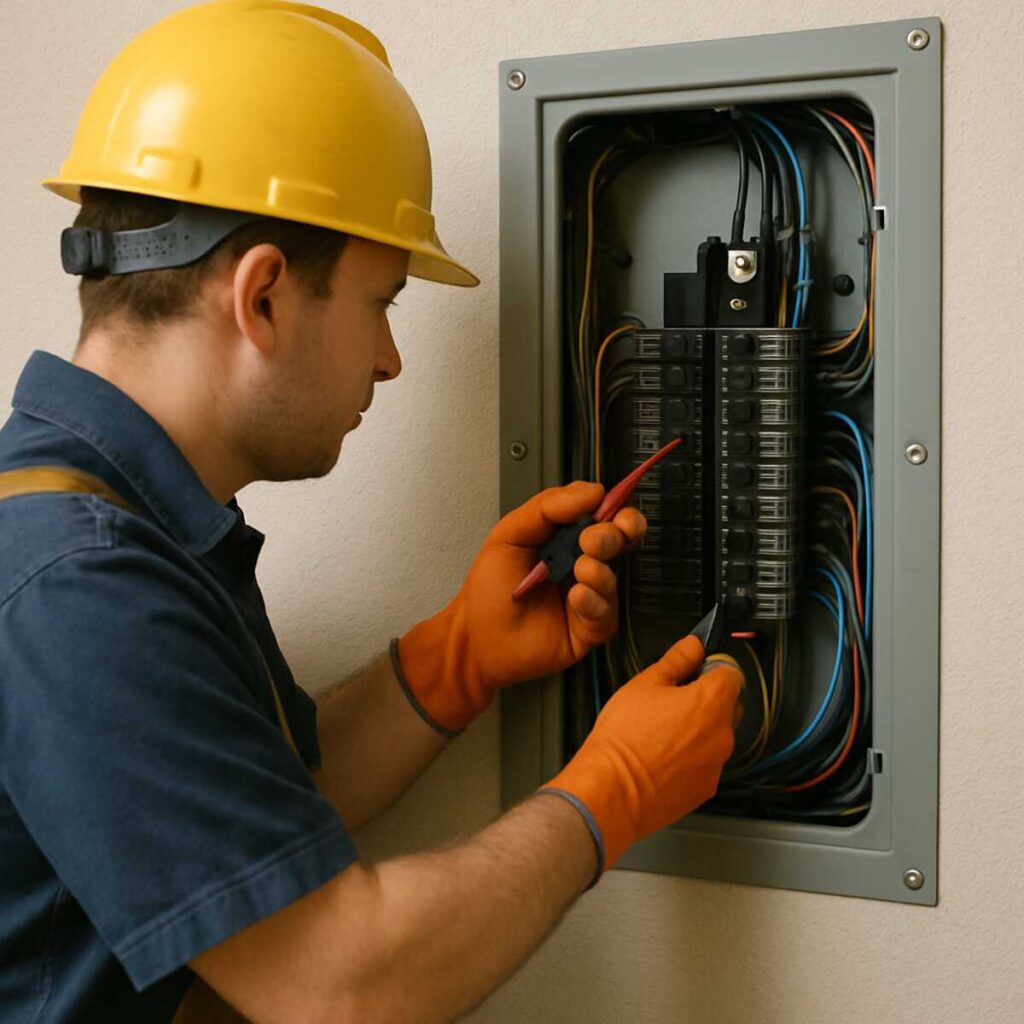
Working as an electrician is a highly skilled, incredibly rewarding profession. You bring power to homes, ensure commercial spaces run smoothly, and keep the modern world connected. But with that immense responsibility comes a unique set of hazards. A single faulty wire, a dropped tool, or a miscommunicated project scope can lead to catastrophic property damage, severe injuries, or crippling lawsuits. The best guide to finding electrician Highlands Ranch CO.
If you are running an electrical contracting business, relying strictly on your expertise isn’t enough. You need a safety net. Navigating the world of business insurance can feel like trying to decipher a complex wiring schematic without a manual. However, building a robust insurance portfolio is non-negotiable for long-term success.
This comprehensive guide will walk you through everything you need to know about electrician insurance. From understanding the core policies to navigating the nuances of specialized coverage, we will help you build a customized shield around your livelihood.
Why Electricians Face Unique Liabilities
Every trade involves risk, but electrical work is in a class of its own. While a carpenter might face a lawsuit for a poorly built cabinet, an electrician faces the reality that a minor mistake can spark a devastating fire.
The risks associated with the electrical trade generally fall into three main categories:
- Property Damage: Working behind walls, in attics, or around expensive equipment means there is always a chance of accidentally damaging a client’s property.
- Bodily Injury: High voltage, heavy equipment, and working at heights put both you and bystanders at physical risk.
- Professional Errors: Giving the wrong advice on an electrical panel upgrade or making a subtle wiring mistake that doesn’t manifest until months later can trigger significant financial losses.
Because of these high stakes, finding the right liability coverage is the foundation of your business survival.
The Foundation: Essential Insurance Policies for Electricians
Not all insurance policies are created equal. Depending on the size of your operation, the types of jobs you take, and the regulations in your state, your insurance needs will vary. Let’s break down the essential pillars of coverage.
General Liability Insurance
If you only purchase one type of insurance, make it this one. General liability for electrical contractors is the absolute bedrock of your risk management strategy. It is designed to protect you against common third-party claims, including bodily injury, property damage, and personal injury (such as libel or slander).
Here is how general liability works in the real world:
- Third-Party Bodily Injury: If a client trips over your extension cord and breaks their wrist, this policy covers their medical bills and your legal defense if they sue.
- Third-Party Property Damage: If you accidentally drop a heavy drill and shatter a client’s expensive hardwood floor, general liability pays for the repairs.
- Completed Operations: This is a crucial aspect for electricians. If you finish a job and a week later a fire breaks out due to your installation, this coverage steps in, protecting against accidental fire damage lawsuits.
Without general liability, a single accident could easily bankrupt a small business.
Workers’ Compensation Insurance
If you have employees, apprentices, or even temporary helpers, you are legally obligated in almost every state to carry workers’ compensation.
Workers compensation for small business owners acts as a safety net for your team. If an employee is electrocuted, falls from a ladder, or develops a repetitive strain injury over time, this insurance covers:
- Medical expenses and hospital bills
- Rehabilitation and physical therapy costs
- A portion of lost wages during recovery
- Death benefits for the employee’s family in the worst-case scenario
Actionable Tip: Even if you are a sole proprietor and your state does not legally require you to carry workers’ comp for yourself, it is still highly recommended. Your standard health insurance will almost certainly deny claims related to workplace injuries.

Commercial Auto Insurance
Many electricians use their personal trucks to drive from job to job when they first start out. This is a massive mistake. Personal auto insurance policies explicitly exclude coverage for vehicles used primarily for business purposes.
If you get into an accident while transporting wire, conduit, and company tools, your personal claim will be denied. Commercial auto coverage for work vans and trucks is vital. It covers:
- Liability for bodily injury and property damage if you or an employee cause an accident.
- Physical damage to your commercial vehicle from collisions, theft, or weather events.
- Medical payments for you and your passengers.
Safeguarding Your Gear: Tools and Equipment Coverage
An electrician without tools is out of business. Because your work requires you to be highly mobile, your expensive gear is constantly exposed to risks that a standard commercial property policy won’t cover.
Inland Marine Insurance
Despite the confusing name, inland marine insurance has nothing to do with boats. Historically, marine insurance covered goods transported over water; inland marine was developed to cover goods transported over land.
Today, inland marine insurance for mobile equipment is exactly what trade contractors need to protect materials, supplies, and heavy equipment while in transit or stored at a temporary job site. If you are transporting $10,000 worth of copper wire to a commercial site and get into an accident that destroys the materials, inland marine covers the loss.
Tools and Equipment Floater
A subset of inland marine insurance, a tools and equipment floater for theft protection, is specifically designed for your day-to-day gear.
Tools are frequently stolen from the backs of vans, directly from open job sites, or even from your garage. This floater “floats” with your tools, meaning the coverage applies wherever the tools happen to be—whether in your truck, at a client’s house, or locked in a storage unit.
Actionable Tip to Lower Premiums:
- Keep an updated, digitized inventory of all your tools, including serial numbers and purchase receipts.
- Install high-quality locks, alarms, and GPS trackers on your work vans. Insurance companies often offer discounts for these preventative measures.
Professional Liability: Protecting Against Mistakes
While general liability covers physical accidents (like a dropped tool), it does not cover financial losses resulting from professional negligence or poor advice. That is where professional liability comes in.
Errors and Omissions Insurance
Often referred to as E&O, this policy is essential for electricians who are involved in design-build projects, give consultations, or draw up schematics.
Errors and omissions for wiring mistakes protects you if a client claims your work failed to meet industry standards, resulting in financial harm. For example, if you incorrectly wire a commercial server room and the system shorts out—causing a business to lose a week of operational revenue—they will sue you for the lost income. General liability won’t cover their lost revenue, but E&O will.
Clearing Up Terminology
You might hear different terms thrown around depending on where you operate. Let’s clarify professional indemnity vs public liability:
- Public Liability: (Often used interchangeably with General Liability) Covers physical injuries or physical property damage caused to a third party by your business activities.
- Professional Indemnity: (Another term for E&O) Covers financial losses a client suffers due to your professional negligence, bad advice, or design flaws.
Both are critical for protecting business assets from faulty workmanship claims. You need public liability for the physical accidents and professional indemnity for the intellectual mistakes.
Navigating Bonds vs. Insurance
One of the most common points of confusion for new electrical contractors is understanding the difference between surety bonds and liability coverage. Clients, especially government municipalities and large commercial developers, will often require you to be “licensed, bonded, and insured.”
- Insurance: Protects you (the business owner). If you make a mistake, the insurance company pays the victim, shielding your bank account. You pay a premium, and you do not have to repay the insurance company for the claim.
- Surety Bonds: Protects the client. A bond is essentially a line of credit. It guarantees that you will fulfill the terms of your contract and follow local building codes. If you abandon a job halfway through or fail to pull the proper permits, the client can make a claim against your bond to get their money back. Unlike insurance, if the bond pays out, you must repay the surety company.
In short: Insurance is your safety net; a bond is your client’s guarantee.
The Cost of Electrician Insurance: What to Expect
Pricing is always a primary concern for contractors. Because no two businesses are exactly alike, premiums can vary wildly. However, understanding how insurers calculate risk can help you anticipate your costs.
The Business Owner’s Policy (BOP)
For many small to medium-sized electrical businesses, the most cost-effective way to buy insurance is through a Business Owner’s Policy. A BOP bundles general liability insurance and commercial property insurance (which covers your office space, computers, and stationary equipment) into one discounted package.
So, how much does a business owner policy cost? For a standard electrical contractor, a BOP typically ranges from $500 to $1,500 per year. The exact price depends on:
- Your annual revenue
- The size of your payroll
- Your location (urban areas typically cost more than rural ones)
- Your claims history
- The specific limits and deductibles you choose
Considerations for Independent Contractors
If you operate alone without employees, your insurance needs will look slightly different. The cost of public liability for sole traders is generally quite low, often falling between $400 and $800 annually for a standard $1 million/$2 million policy (meaning $1 million coverage per occurrence, and $2 million aggregate for the year).
However, being a sole trader doesn’t mean you should skimp on protection. Securing comprehensive coverage for independent contractors—which might include general liability, a tools floater, and a commercial auto policy—can still be bundled efficiently to keep costs under $2,000 a year, providing total peace of mind.
Mastering the Paperwork: Certificates of Insurance
Having insurance is only half the battle; proving you have it is the other half.
When you bid on lucrative commercial jobs, or even when you work as a subcontractor for a General Contractor (GC), you will be asked for a COI. Obtaining a certificate of insurance for clients is a standard operating procedure in the trades.
A COI is a single-page document provided by your insurance broker that summarizes your coverage. It lists your policy numbers, the types of coverage you hold (General Liability, Workers’ Comp, Auto), your coverage limits, and the effective dates.
Why Clients Demand a COI
General contractors carry their own insurance, but they do not want their policies taking the hit for your mistakes. If an electrician burns down a job site and doesn’t have insurance, the GC’s insurance has to pay. To prevent this, GCs will require a COI and will often ask to be listed as an “Additional Insured” on your policy. This means your insurance will protect the GC if they are sued because of your specific work.
Actionable Tip: Build a strong relationship with a responsive insurance broker. When you are bidding on a job that requires a COI, a delay in producing the paperwork can cost you the contract. A good broker will generate and email a COI within minutes of your request.
Implementing Risk Management for Electrical Trade Businesses
Insurance is how you pay for accidents, but risk management is how you prevent them in the first place. Insurance companies love low-risk businesses. By implementing strict safety protocols, you not only protect your workers and clients but also position yourself to negotiate lower insurance premiums.
Effective risk management for electrical trade businesses involves several layers:
1. Safety Training and Protocols
- Lockout/Tagout (LOTO): Strictly enforce LOTO procedures to ensure that electrical circuits are completely de-energized before work begins.
- PPE Compliance: Mandate the use of voltage-rated gloves, arc flash face shields, insulated tools, and fire-resistant clothing.
- Regular Meetings: Hold weekly “toolbox talks” to discuss safety hazards, review recent near-misses, and keep safety top of mind for all employees.
2. Contractual Risk Transfer
Never work on a handshake. Ensure you have legally binding contracts for every job. Your contracts should clearly outline the scope of work, payment terms, and limitations of liability. By strictly defining what you are (and aren’t) responsible for, you limit the chances of a client successfully suing you for something outside your control.
3. Quality Assurance and Testing
Most electrical fires and failures are the result of poor connections, overloaded circuits, or pinched wires. Implement a rigorous testing protocol before finalizing any job. Have a secondary supervisor double-check complex installations. Documenting that you followed all National Electrical Code (NEC) standards and performed successful safety tests will be vital evidence if you ever face a faulty workmanship claim.
Advanced Coverages to Consider as You Grow
As your electrical contracting business expands—perhaps moving from residential service calls to large-scale commercial installations or smart-home integrations—your risk profile changes.
Cyber Liability Insurance
If you are installing smart home systems, commercial security networks, or automated lighting systems, you are handling client network access. If your company laptop gets hacked and a cybercriminal uses your access to breach a client’s home network, you could be held liable. Cyber liability covers the costs associated with data breaches, including legal fees, notification costs, and extortion payments.
Employment Practices Liability Insurance (EPLI)
Once you start hiring a larger crew, your exposure to employee-related lawsuits increases. EPLI protects your business against claims of wrongful termination, discrimination, sexual harassment, and breach of employment contract.
Commercial Umbrella Insurance
If a catastrophic accident occurs—for example, a multi-alarm fire at a commercial complex traced back to your wiring—the damages could easily exceed the $1 million or $2 million limits of your standard general liability policy. An umbrella policy provides additional layers of liability coverage (often in $1 million increments) on top of your existing policies, ensuring that a massive lawsuit doesn’t pierce the corporate veil and drain your business assets.
Step-by-Step Guide to Buying Electrician Insurance
Choosing the right insurance doesn’t have to be overwhelming if you break it down into a systematic process.
Step 1: Assess Your Unique Risks
Sit down and evaluate your day-to-day operations. Do you work strictly on residential homes, or do you handle high-voltage commercial jobs? Do you have employees, or are you a solo operator? Do you leave heavy machinery on job sites overnight? Your answers will dictate the specific riders and floaters you need.
Step 2: Work with a Trade-Specific Broker
Do not buy business insurance from the same general website where you buy your car insurance. Seek out an independent commercial insurance broker who specializes in construction and trade contractors. They will understand the nuances of the electrical industry, know which carriers offer the best rates for electricians, and ensure you aren’t paying for overlapping coverage.
Step 3: Compare Multiple Quotes
Never accept the first quote you receive. Have your broker pull quotes from at least three different highly rated insurance carriers (look for carriers with an A.M. Best rating of A or higher). Compare not just the monthly premiums, but the deductibles, the coverage limits, and the specific exclusions of each policy.
Step 4: Review Exclusions Carefully
The fine print matters. Some general liability policies specifically exclude work done on condominiums, multi-family tracts, or structures over a certain number of stories. Make sure the policy you buy actually covers the type of work you do every day.
Step 5: Audit Annually
Your business is not static, and your insurance shouldn’t be either. Review your coverage annually. If you bought three new work vans, hired five new apprentices, and expanded your service area into a neighboring state, your baseline BOP is no longer sufficient. Update your policies to reflect your current operational reality.
Conclusion
Running an electrical contracting business is challenging enough without losing sleep over the possibility of a financially devastating lawsuit or a stolen truck full of tools.
Investing in the right electrician insurance isn’t just about complying with local laws or fulfilling the demands of a general contractor’s paperwork; it is about protecting the livelihood you have worked so hard to build. By securing robust liability coverage, safeguarding your team with workers’ comp, and protecting your physical assets with inland marine and commercial auto policies, you create a foundation of stability.
Remember to continually assess your risks, maintain strong safety protocols, and build a relationship with a broker who understands the electrical trades. When you have the right safety nets in place, you can focus on what you do best: delivering exceptional, safe, and reliable electrical work to your clients.