


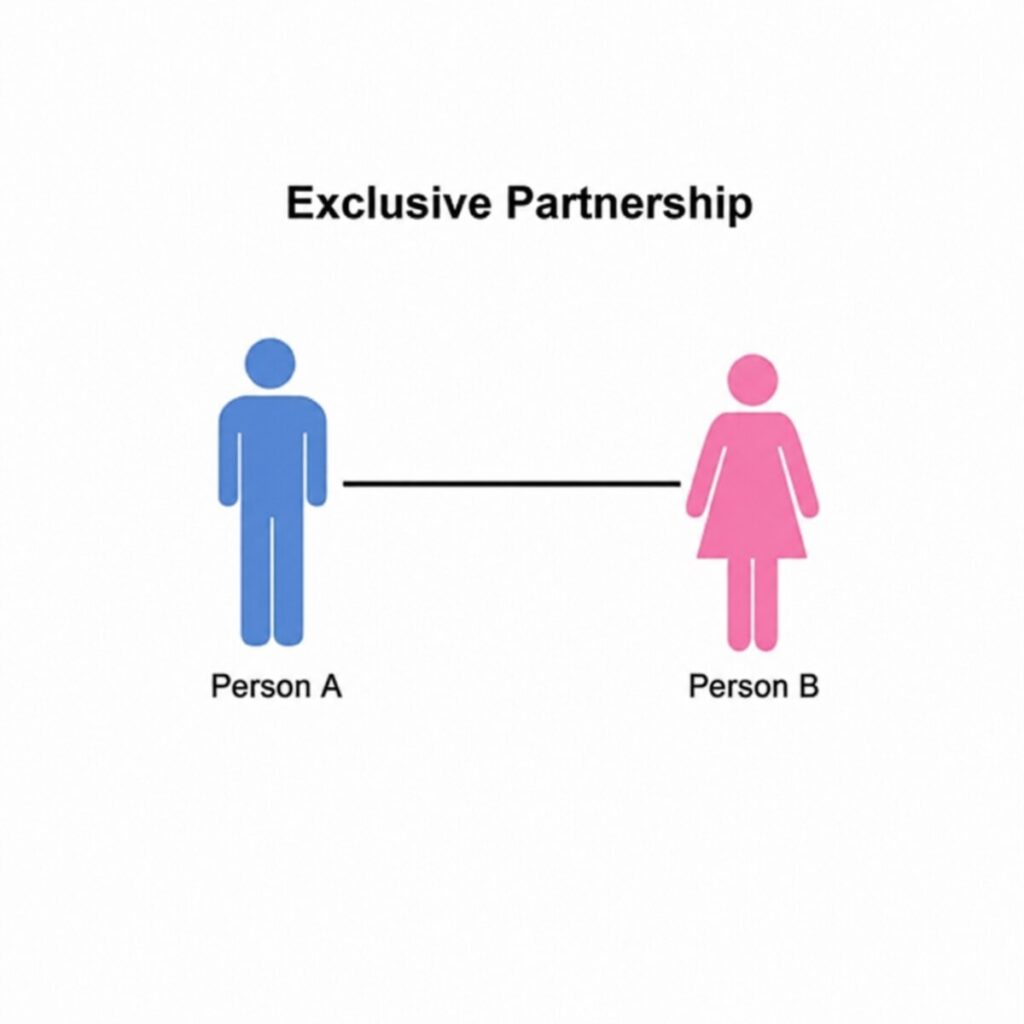
A monogamist is a person who practices, prefers, or believes in monogamy: having one romantic or sexual partner at a time, usually within an exclusive relationship. The monogamist meaning is simple on the surface, but it becomes clearer when compared with a polyamorist, who may have or seek multiple romantic relationships with the knowledge and consent of everyone involved. Find out the best info about ısparta escort.
Both relationship styles can be ethical, committed, and meaningful when people communicate honestly and respect one another’s boundaries. The key difference is not whether someone “cares more” or “loves better.” It is how they structure romantic and sexual exclusivity, commitment, emotional intimacy, and agreement.
What does monogamist mean?
A monogamist is someone who chooses or supports a relationship structure in which they have one partner at a time. In most everyday use, the meaning of monogamist refers to a person who wants romantic and sexual exclusivity with one partner, whether in dating, partnership, marriage, or another committed bond.
That definition matters because “monogamist” describes both a relationship preference and, for some people, a personal value. One monogamist may say, “I only want to date one person at a time.” Another may say, “I believe long-term partnership works best for me when it is exclusive.” Both uses are valid, as long as the people involved are clear about what exclusivity means to them.
The word is closely related to monogamy, which means a relationship structure centered on one partner. A monogamist is the person who practices or prefers that structure. In plain language, if someone says, “I’m a monogamist,” they usually mean, “I want a relationship where we are each other’s only romantic or sexual partner.”
Still, monogamy is not always identical in every relationship. Some couples define exclusivity as sexual exclusivity. Others include emotional exclusivity, shared future planning, public commitment, or marriage. This is why the most accurate definition of monogamist includes not just “one partner,” but also the idea of a mutually understood agreement.
Defining characteristics of a monogamist
A monogamist relationship usually includes these core features:
- One romantic or sexual partner at a time: The person focuses their intimate partnership on one individual.
- Mutual exclusivity: Both partners typically agree not to pursue romantic or sexual relationships with others.
- Clear commitment expectations: The relationship may involve dating exclusively, living together, marriage, or another shared commitment.
- Boundary-based trust: Trust often rests on the expectation that both people will honor the exclusive agreement.
- Relationship clarity: Partners usually know where they stand and what behavior counts as inside or outside the agreement.
- A single primary romantic bond: Emotional energy, future planning, and partnership responsibilities are often centered on one person.
This does not mean monogamists are all the same. Some are deeply traditional. Some are not. Some want marriage, children, and legal partnership. Others want a private, committed relationship without those milestones. The defining point is not the shape of the life they build; it is the preference for one intimate partner at a time.
What is a polyamorist?
A polyamorist is someone who practices, prefers, or is open to polyamory: having, or being able to have, multiple romantic relationships with the informed consent of everyone involved. Polyamory is not the same as cheating, because ethical polyamory depends on honesty, consent, communication, and agreed-upon boundaries.
The word “polyamorist” comes from the idea of “many loves.” In practice, that can look different from one person to another. One polyamorist may have two committed partners. Another may be married to one partner while also dating someone else with everyone’s knowledge. Another may be open to multiple relationships but currently have only one partner or none.
A helpful distinction is this: polyamory is about the possibility of multiple loving or romantic relationships, not simply having multiple sexual partners. Some polyamorous relationships include sexual intimacy; some do not. Some are highly structured, with calendars, agreements, and defined roles. Others are more fluid, as long as everyone involved understands the arrangement.
At its healthiest, polyamory is not a loophole for avoiding commitment. It often requires more explicit communication than many people are used to, because several people’s feelings, time, needs, and boundaries may be involved. A polyamorist may value commitment very deeply, but they may not connect commitment with exclusivity in the same way a monogamist usually does.
The key difference is exclusivity, not sincerity
The central contrast between a monogamist and a polyamorist is the role of exclusivity. A monogamist generally wants one exclusive romantic or sexual partner at a time. A polyamorist may be open to more than one romantic relationship at the same time, as long as it is honest and consensual.
That difference can be easy to oversimplify, so let’s sharpen the language. Monogamy says, “Our romantic or sexual bond is exclusive.” Polyamory says, “Romantic or loving bonds do not have to be limited to one person, if everyone knowingly agrees.” Neither sentence automatically tells you whether a relationship is healthy. A monogamous relationship can be loving or unhealthy. A polyamorous relationship can be respectful or messy. The structure is not a guarantee; the behavior is what gives the structure integrity.
Think of relationship structure like grammar. Monogamy is one way to arrange the sentence. Polyamory is another. The sentence still needs honesty, care, and clarity to make sense.
Main differences in plain language
Here are the most important differences between monogamist and polyamorist relationship styles:
- Number of partners: A monogamist usually wants one partner at a time. A polyamorist may have or want multiple romantic partners at the same time.
- Exclusivity: Monogamist relationships are usually exclusive. Polyamorist relationships are usually non-exclusive but consensually agreed upon.
- Commitment style: Monogamists often link commitment with being each other’s only partner. Polyamorists may define commitment through honesty, care, reliability, and negotiated agreements rather than exclusivity.
- Boundaries: Monogamous boundaries often focus on not dating or being sexual with others. Polyamorous boundaries may focus on disclosure, safer sex practices, scheduling, emotional responsibilities, and respect among partners.
- Jealousy expectations: Monogamists may try to avoid jealousy by preserving exclusivity. Polyamorists may expect jealousy to be discussed, managed, and understood rather than treated as proof the relationship is wrong.
- Social visibility: Monogamy is often more socially recognized and legally supported. Polyamory may require more explanation because it is less familiar to many people.
- Relationship vocabulary: Monogamous relationships often use familiar terms like partner, spouse, boyfriend, or girlfriend. Polyamorous relationships may also use those terms, along with words like metamour, nesting partner, or primary partner, depending on the arrangement.
The biggest mistake is to treat one style as mature and the other as selfish. That framing is too blunt to be useful. A better question is whether the people involved are honest, consenting, emotionally responsible, and compatible in what they want.
How do monogamist and polyamorist relationships work in real life?
In real life, monogamist and polyamorist relationships work through agreements. The difference is what those agreements allow, limit, and protect.
A monogamist relationship often works by creating a clear boundary around the couple. Two people agree that they will not date, pursue, or become sexually involved with others. That agreement can create a sense of safety and focus. It can make practical decisions simpler because the romantic partnership is centered on two people.
A polyamorist relationship works by creating agreements that allow more than one romantic or intimate bond. Instead of assuming exclusivity, partners talk about what kinds of outside relationships are acceptable, what needs to be disclosed, how time will be shared, and what emotional responsibilities each person has. The point is not “anything goes.” The point is that the rules are consciously negotiated rather than automatically monogamous.
Practical example of a monogamist relationship
Imagine Maya and Jordan are dating. After several months, they talk about what they want and agree to become exclusive. For them, exclusivity means neither person will date, kiss, or have sex with anyone else. If either person starts wanting something different, they agree to talk about it before acting on it.
This is a monogamist relationship because the romantic and sexual agreement centers on one partner at a time. Maya and Jordan may still have close friendships, private interests, and independent lives. Monogamy does not mean they must meet every need for each other or stop having meaningful bonds outside the relationship. It means their intimate partnership is exclusive by agreement.
Practical example of a polyamorist relationship
Now imagine Sam, Lee, and Priya. Sam and Lee are long-term partners. Lee also has a romantic relationship with Priya, and everyone knows about it. Sam and Priya are not dating each other, but they communicate respectfully when their schedules or shared plans overlap. Lee is responsible for being honest with both partners, managing time thoughtfully, and honoring the agreements each relationship has made.
This is a polyamorist relationship because more than one romantic connection exists with consent and awareness. It is not cheating, because the relationships are not hidden. It is not automatically casual, because the connections may be emotionally serious. The defining feature is consensual openness to multiple romantic bonds.
A relationship structure is not a personality test
It can be tempting to label monogamists as loyal and polyamorists as adventurous, or monogamists as possessive and polyamorists as emotionally detached. Those labels may sound tidy, but they are not fair. People choose relationship structures for many reasons: emotional comfort, cultural background, personal values, past experiences, sexual orientation, family goals, spiritual beliefs, or simply what feels natural.
A monogamist can be independent, open-minded, and flexible. A polyamorist can be deeply devoted, steady, and family-oriented. The structure tells you something important about relationship preference, but it does not tell you everything about a person’s character.
Monogamy is based on one-at-a-time commitment
Monogamy is often familiar because many societies treat it as the default model for romantic partnership. That familiarity can be comforting. People usually know the basic script: two people date, become exclusive, perhaps build a shared home, marry, or make long-term plans together.
For a monogamist, the appeal may come from focus. They may want to invest their romantic energy in one person, build trust through exclusivity, and avoid the complexity of multiple romantic relationships. They may also feel that sexual and emotional exclusivity are central expressions of love. None of this has to be rigid. It simply means exclusivity feels meaningful to them.
Monogamy can also offer practical clarity. There are fewer partners’ schedules to coordinate, fewer relationship roles to define, and fewer social explanations to manage. Legal systems, family expectations, and cultural rituals often recognize monogamous partnership more readily than polyamorous structures.
Still, monogamy works best when it is chosen, not assumed. Two people may both say they are monogamous and still disagree about details. Is flirting acceptable? What about emotional intimacy with an ex? What counts as cheating? Good monogamy is not built on guessing. It is built on explicit conversations.
Healthy monogamist agreements often include
- A shared definition of exclusivity: Both partners know whether the agreement is romantic, sexual, emotional, or all three.
- Honest communication about attraction: Being monogamous does not mean never noticing other people. It means choosing how to respond within the agreement.
- Respect for friendships and independence: A healthy monogamist relationship does not require isolation from others.
- Clear repair processes: If trust is damaged, partners need a way to talk, decide what happens next, and avoid vague resentment.
- Room for growth: People change over time. A strong agreement can be revisited without being treated as a threat.
Monogamy is not automatically simple, but it can be beautifully clear when both people want it and define it together.
Polyamory is based on consensual multiple connection
Polyamory begins from a different assumption: a person may be able to love, date, or build meaningful relationships with more than one person. For a polyamorist, exclusivity is not always the defining proof of love. They may see love as something that can expand, provided everyone involved is informed and respected.
That last phrase is essential. Polyamory without consent is not ethical polyamory. If someone hides a second relationship from a partner who believes the relationship is exclusive, that is cheating, not polyamory. The ethical foundation is transparency.
Polyamorous relationships can take many forms. Some people practice hierarchical polyamory, where one relationship is described as primary and others as secondary. Some prefer non-hierarchical polyamory, where they try not to rank relationships. Some have a nesting partner, meaning someone they live with. Some people date separately; others form triads or larger relationship networks. There is no single template.
Because polyamory involves more people, it often demands deliberate emotional management. Time, holidays, health agreements, public visibility, family introductions, and long-term planning may require careful conversation. For some, that complexity feels honest and expansive. For others, it feels stressful. Compatibility matters.
Healthy polyamorist agreements often include
- Informed consent: Everyone directly affected understands the relationship structure.
- Disclosure expectations: Partners know what should be shared, when, and with whom.
- Time and scheduling agreements: Multiple relationships need realistic attention, not vague promises.
- Safer sex practices: Partners discuss testing, protection, risk, and changes in sexual activity.
- Emotional responsibility: Each person owns their choices instead of blaming one partner for another relationship’s problems.
- Respect among partners: Even when not everyone is close, people are treated as real humans, not obstacles.
- Flexibility and review: Agreements may need to change as relationships deepen or circumstances shift.
Polyamory is not for everyone, just as monogamy is not for everyone. The respectful question is not “Which structure is superior?” The better question is “Which structure can these people practice honestly and kindly?”
The role of consent separates polyamory from cheating
One of the most important distinctions in this topic is the difference between polyamory and betrayal. Cheating happens when someone violates the relationship agreement, especially through secrecy or deception. Polyamory, by contrast, requires knowledge and consent.
A monogamist can cheat by secretly seeing someone else after agreeing to be exclusive. A polyamorist can also cheat if they break the agreements of their polyamorous relationship. For example, if a person agrees to disclose new sexual partners and then hides one, the issue is not that polyamory failed. The issue is that the person violated consent and trust.
This is why relationship structure alone does not define ethical behavior. Ethics come from honesty, clarity, and respect for agreements. A monogamous relationship can be ethical when both people freely choose exclusivity. A polyamorous relationship can be ethical when everyone knowingly agrees to the structure and has room to express needs or concerns.
Consent in this context means
- People understand the relationship structure before they agree to it.
- No one is pressured, threatened, or manipulated into accepting an arrangement.
- Partners can ask questions and receive honest answers.
- Agreements are specific enough to guide behavior.
- People can revisit boundaries as feelings or circumstances change.
Consent is not a one-time permission slip. It is an ongoing practice. Whether a relationship is monogamist or polyamorist, consent keeps the structure humane.
Common misconceptions about monogamists and polyamorists
Misunderstandings thrive when language gets lazy. “Monogamist” and “polyamorist” are descriptive words, not moral rankings. Using them well helps people talk about relationships without turning preferences into accusations.
Here are several common misconceptions worth clearing up:
- Misconception: Monogamists are automatically more loyal. Loyalty means honoring commitments. A monogamist can be loyal, but exclusivity alone does not guarantee honesty or care.
- Misconception: Polyamorists cannot commit. Many polyamorists make serious commitments. They may simply define commitment differently from exclusivity.
- Misconception: Monogamy means one person must meet every need. Healthy monogamous partners still need friends, family, community, hobbies, and personal space.
- Misconception: Polyamory means there are no rules. Ethical polyamory often involves detailed agreements and regular communication.
- Misconception: Jealousy only exists in polyamory. Jealousy can appear in any relationship structure. What matters is how people respond to it.
- Misconception: Polyamory is the same as casual dating. Polyamory may include casual relationships, but it can also include long-term love, cohabitation, parenting, and deep commitment.
- Misconception: Monogamy is always traditional. Some monogamists are conventional, but others choose exclusivity while rejecting traditional gender roles or marriage expectations.
- Misconception: One style is more evolved. Relationship maturity is shown through self-awareness, communication, accountability, and care, not through a single structure.
Good language makes room for nuance. It helps people say, “This is what works for me,” without implying, “Everyone else is doing love wrong.”
Compatibility depends on shared expectations
A monogamist and a polyamorist can care about each other deeply and still be incompatible. Love is powerful, but it does not erase structural mismatch. If one person needs exclusivity to feel secure and the other needs openness to feel authentic, both needs deserve respect.
The hard part is that people sometimes discover these differences after feelings have already developed. One partner may hope the other will “come around.” Another may agree to a structure they do not truly want because they fear losing the relationship. That rarely creates lasting peace. It often creates resentment, anxiety, secrecy, or grief.
Compatibility is not about forcing agreement. It is about telling the truth early enough that people can make informed choices.
Questions partners should discuss early
If relationship structure matters to you, talk about it before assumptions become promises. Helpful questions include:
- Do you prefer monogamy, polyamory, or something else?
- What does exclusivity mean to you?
- Are romantic and sexual boundaries the same or different for you?
- Have you practiced this relationship style before?
- What would feel like betrayal to you?
- How do you want to handle attraction to other people?
- How much information do you want about outside connections, if any are allowed?
- Are you hoping for marriage, cohabitation, parenting, or other long-term commitments?
- What kind of emotional support do you expect from a partner?
- What would make you feel respected and secure?
These questions are not meant to turn dating into a courtroom interview. They are meant to prevent the quiet disaster of two people using the same word, “relationship,” while imagining two different lives.
Language helps people define what they actually want
The phrase “meaning of monogamist” may sound like a dictionary question, but it often points to something more personal. People ask what monogamist means because they are trying to understand themselves, a partner, or a relationship conversation that suddenly became complicated.
Clear definitions can lower emotional temperature. If someone says, “I’m a monogamist,” they are not necessarily judging polyamory. They may be naming the relationship structure they need. If someone says, “I’m polyamorous,” they are not necessarily rejecting commitment. They may be naming the relationship structure that feels honest to them.
Precise language also protects consent. When people define their terms, they reduce the risk of accidental harm. “Exclusive,” “open,” “polyamorous,” “dating,” “partner,” and “commitment” can mean different things in different mouths. The more important the relationship, the more carefully those words deserve to be handled.
A simple vocabulary guide
- Monogamist: A person who practices or prefers having one romantic or sexual partner at a time.
- Monogamy: A relationship structure based on one partner at a time, usually with exclusivity.
- Polyamorist: A person who practices or prefers the possibility of multiple romantic relationships with consent.
- Polyamory: A relationship structure that allows multiple romantic or loving relationships with everyone’s informed agreement.
- Open relationship: A broad term for a relationship that allows some outside romantic or sexual connection. Not every open relationship is polyamorous.
- Cheating: Breaking a relationship agreement through secrecy, deception, or behavior outside the agreed boundaries.
- Consent: Clear, informed, and freely given agreement that can be revisited.
- Boundary: A stated limit or condition that helps protect emotional, physical, or relational well-being.
Words do not solve every relationship problem, but they give people a better map. And when the terrain is love, a better map is no small thing.
Choosing a relationship style is a personal decision
No article can tell you whether you “should” be a monogamist or a polyamorist. Relationship style is not a badge you earn. It is a way of organizing intimacy, responsibility, time, desire, and trust.
Some people know their preference early. Others learn through experience. Some people are happily monogamous for years and later become curious about consensual non-monogamy. Some try polyamory and realize they prefer exclusivity. Some feel flexible depending on the person, season of life, or agreement. Human beings are not stone tablets. They are living drafts.
What matters is not adopting the most impressive label. What matters is being honest about what you can offer and what you need. If exclusivity is essential to your emotional safety, that deserves to be named. If non-exclusivity is central to your understanding of love and freedom, that also deserves to be named. The goal is not to win an argument. The goal is to build relationships where people can consent with full information.
A reflection checklist
Use these prompts if you are trying to understand your own preference:
- I feel most secure in a relationship when…
- I define commitment as…
- I define betrayal as…
- I feel comfortable or uncomfortable imagining my partner dating someone else because…
- I want one partner, multiple partners, or flexibility because…
- I am willing to communicate about jealousy by…
- I need my partner or partners to be honest about…
- I can realistically offer time, care, and accountability by…
- I would rather be single than agree to…
- I am open to learning more about…
These answers may change over time, and that is allowed. The important thing is to speak from truth rather than fear, pressure, or performance.
Respectful conversations make the difference
Whether you are talking to a date, spouse, partner, friend, or yourself, the tone matters. Relationship structure can touch sensitive places: fear of abandonment, desire for freedom, past betrayal, cultural expectations, religious beliefs, body autonomy, and identity. A careless sentence can make someone feel judged before the real conversation begins.
Respectful language does not mean pretending every arrangement works for every person. It means recognizing that people can make different ethical choices. You can say, “Polyamory is not for me,” without saying, “Polyamory is wrong.” You can say, “I do not want monogamy,” without saying, “Monogamous people are insecure.” Precision is kinder than contempt.
A strong conversation names both preference and boundary. For example: “I care about you, and I need a monogamous relationship to feel safe.” Or: “I’m interested in building polyamorous relationships, and I don’t want to promise exclusivity I cannot honestly offer.” Those sentences may be difficult, but they are clean. They let the other person choose reality rather than illusion.
Helpful language to use
- “This is what I need in order to feel respected.”
- “Can we define what exclusivity means to each of us?”
- “I do not want to assume we mean the same thing.”
- “I respect your preference, even if it is not compatible with mine.”
- “I need time to think before agreeing to this.”
- “I want our agreement to be clear enough that neither of us has to guess.”
- “If our needs are different, I would rather be honest than pressure either of us.”
Good relationship language is not about sounding polished. It is about making the truth easier to hear.
Practical scenarios that show the difference
Examples help because relationship words can become abstract very quickly. The difference between monogamist and polyamorist is easiest to see when people make choices in everyday situations.
Scenario 1: Dating apps
A monogamist named Alex is dating and updates their profile to say they are looking for an exclusive relationship. After a few promising dates with one person, Alex decides to stop dating others and asks whether the other person wants the same. The key point is one-at-a-time focus.
A polyamorist named Ren also uses dating apps, but their profile says they are polyamorous and already have a partner. Ren is not hiding that information until later. They make the structure visible so people can decide whether they are comfortable from the beginning.
Scenario 2: Attraction to someone new
A monogamist in a committed relationship may notice attraction to a coworker and choose not to pursue it. They may create distance, avoid flirtation, or talk with their partner if the attraction feels disruptive. Their agreement says attraction is not the issue; acting outside exclusivity is.
A polyamorist who feels attraction to someone new may discuss it with existing partners according to their agreements. Depending on those agreements, they may be free to pursue the connection, or they may need to talk through timing, boundaries, and emotional impact first. Their structure allows possibility, but not secrecy.
Scenario 3: Long-term planning
A monogamist couple planning to live together may discuss finances, household chores, family expectations, and whether marriage matters to them. Their romantic planning usually centers on two people.
A polyamorous network planning long-term commitments may need additional conversations. Who lives with whom? How are holidays handled? Are partners introduced to family? What happens if one relationship changes? The planning is not impossible, but it involves more moving pieces.
These scenarios show the cleanest contrast: monogamist relationships usually protect one exclusive bond, while polyamorist relationships create consent-based room for more than one bond.
FAQ: Monogamist vs. polyamorist
What is the simplest meaning of monogamist?
A monogamist is someone who practices or prefers monogamy, meaning one romantic or sexual partner at a time. In everyday relationship language, the meaning of monogamist usually includes exclusivity and a shared agreement not to pursue other partners.
Is a monogamist always married?
No. A person can be a monogamist while dating, engaged, married, partnered, or single. Monogamist describes a preferred relationship structure, not a legal status.
Can a single person be a monogamist?
Yes. A single person can still identify as a monogamist if they prefer one exclusive partner when they are in a relationship. Relationship status and relationship preference are not the same thing.
Is polyamory the same as cheating?
No. Cheating involves breaking an agreement, often through secrecy or deception. Polyamory is based on informed consent, meaning everyone involved knows about and agrees to the relationship structure.
Can polyamorists be committed?
Yes. Polyamorists can make serious, long-term, caring commitments. They may not define commitment through exclusivity, but they can define it through honesty, reliability, emotional presence, shared responsibilities, and clear agreements.
Can a monogamist date a polyamorist?
They can, but compatibility depends on expectations. If the monogamist needs exclusivity and the polyamorist needs openness, the relationship may become painful unless both people genuinely want the same agreement. Neither person should be pressured into a structure that feels wrong for them.
Is one relationship style healthier than the other?
Not automatically. A healthy relationship depends on consent, respect, communication, emotional responsibility, and compatible expectations. Monogamy and polyamory can both be healthy or unhealthy depending on how people practice them.
What if I do not know which style fits me?
It is okay not to know immediately. Reflect on what makes you feel secure, what kind of commitment you want, how you respond to jealousy, and what agreements you can honestly keep. You do not have to choose a label before you understand your needs.
Can someone change from monogamist to polyamorist, or the other way around?
Some people’s preferences remain steady, while others change through experience, reflection, or life circumstances. A change in preference should be communicated honestly, especially if another person’s consent and expectations are involved.
What is the most respectful way to discuss this with a partner?
Be direct and kind. Say what you want, ask what they want, define key terms, and avoid treating either preference as morally superior. The goal is not to persuade someone into your ideal structure; it is to find out whether your needs can meet honestly.
The clearest definition is also the most useful one
The clearest definition of a monogamist is this: a person who practices or prefers one romantic or sexual partner at a time, usually with an agreement of exclusivity. A polyamorist, by contrast, practices or prefers the possibility of multiple romantic relationships with everyone’s informed consent.
The difference is not about who loves more deeply, who is more loyal, or who is more modern. The difference is the structure of the agreement. Monogamist relationships typically center one exclusive partnership. Polyamorist relationships make ethical room for more than one romantic connection.
Once the language is clear, the real work begins: honest conversation, respectful boundaries, and choices that match the people involved. Love may be emotional, but relationships are also agreements. The healthier the agreement, the more room there is for trust to breathe.